Last week, Camara Education officially launched our AI-powered learning programme, bringing together supporters and friends who share our commitment to transforming education in under-resourced schools across Africa.
We extend our heartfelt thank you to Bookstein Projects, all our guests, and our board members who attended for their invaluable support. We are deeply grateful to all our donors, whose generosity makes our work possible and allows us to continue transforming education in under-resourced schools.
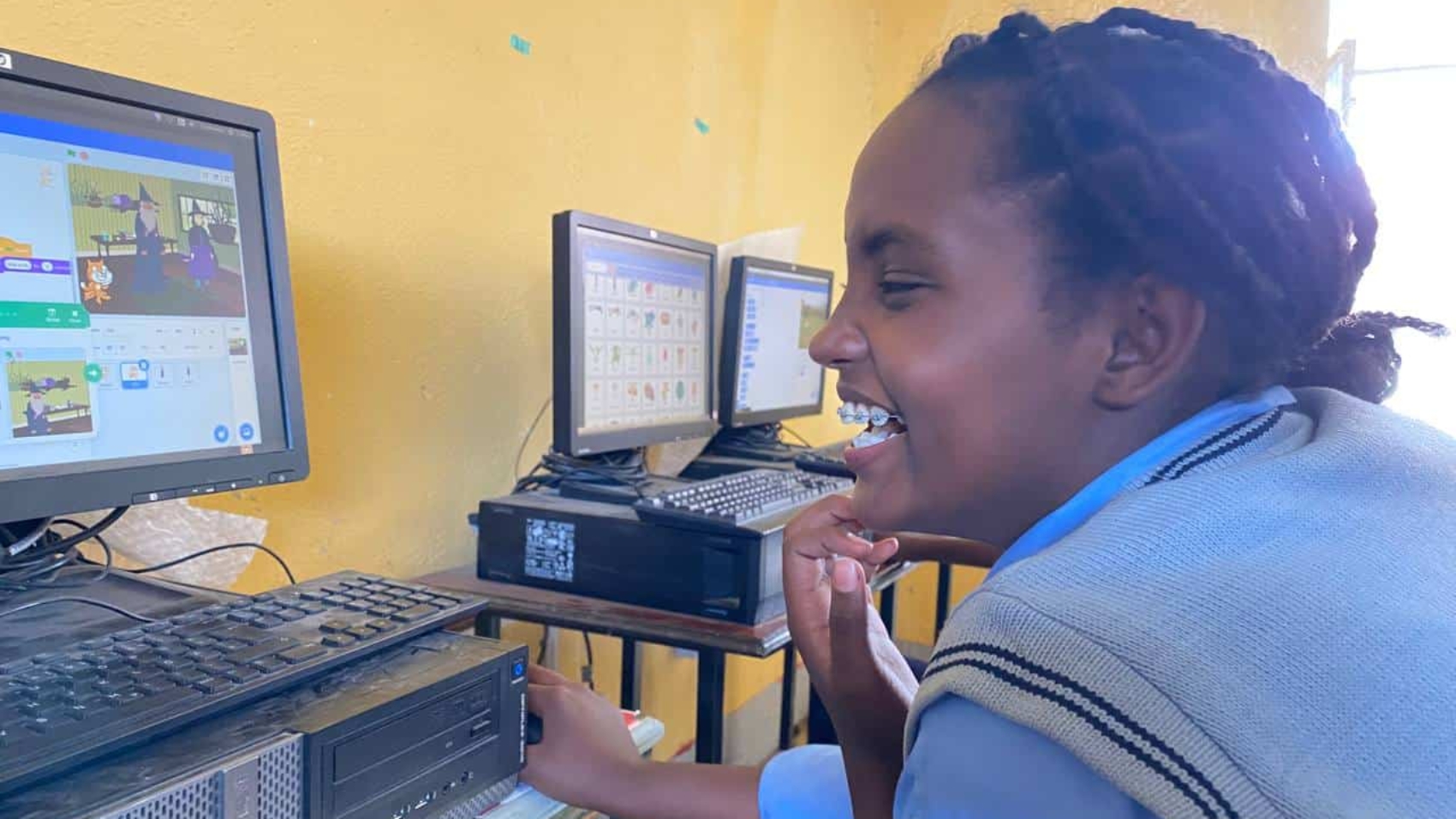
At the event, we highlighted the Camara AI-Assistant, a simple yet powerful tool already making a difference in Ethiopia:
Runs on low-cost computers that schools already have
Built around the local curriculum, ensuring direct relevance for teachers and students
Fully functional offline, allowing access in schools without internet connectivity
We are seeking support to:
Continue improving the AI-Assistant
Upgrade school computer labs
Train teachers to use the tool effectively
With international aid declining, private support has never been more important. Every contribution has a direct impact:
£50 provides five children with access to the AI-Assistant
£500 provides fifty children with access
We invite you to support Camara Education and help ensure that technology reaches every classroom, empowering students and teachers alike.
Microsoft has announced that Windows 10 will reach End of Support on October 14, 2025. After this date, devices running Windows 10 will no longer receive security updates, leaving them vulnerable to threats. Now is the time to prepare your organization for a smooth migration to Windows 11.
Top 10 Steps to Prepare & Transition
1. Understand the End-of-Life Timeline
Official EOL Date: October 14, 2025
After this, Windows 10 won’t receive:
Security patches
Feature updates
Bug fixes or technical support (except via extended support plans)
Risk: Continuing use past EOL can expose your systems to cybersecurity threats.
2. Check Hardware Compatibility
Windows 11 has strict hardware requirements:
TPM 2.0 (Trusted Platform Module)
UEFI with Secure Boot
Intel 8th Gen / AMD Ryzen 2000 series or newer
Minimum: 4 GB RAM, 64 GB storage
Use Microsoft’s PC Health Check Tool or third-party tools like WhyNotWin11 to assess device readiness.
3. Inventory Your Devices
Create a list of all company endpoints (desktops, laptops).
Tag them as:
Compatible
Needs upgrade (RAM, TPM, etc.)
Replace (non-compliant systems)
Use asset management software or a centralised spreadsheet for tracking.
4. Evaluate Your Software Stack
Ensure that business-critical apps are compatible with Windows 11.
Test internally or check vendor documentation.
Watch for legacy apps or internal tools that may require updates or replacements.
5. Plan the Rollout Strategy
Options include:
Phased Rollout (recommended): Start with IT/test group, then expand.
In-place Upgrade for compatible devices.
Clean Install for best performance on new or re-imaged machines.
New Device Deployment for non-compliant systems.
Schedule upgrades during low-demand periods to minimise disruption.
6. Consider Extended Security Updates (ESUs)
If you can’t upgrade in time, Microsoft will offer paid ESUs for Windows 10 until October 2028, but:
Only available for certain editions (e.g., Enterprise).
Not a long-term solution, use only to buy time.
This can get expensive and should be used sparingly.
7. Backup and Data Migration
Before upgrading:
Backup all critical data (cloud and local).
Validate backup recovery options.
Test automated migration tools for profiles and user settings (e.g., OneDrive, USMT).
Always have a rollback option if something goes wrong.
8. Train Staff and Communicate the Change
Windows 11 has a familiar UI but includes new features and layout changes (Start menu, settings, Snap Layouts, etc.).
Provide:
Short training sessions or tutorials
FAQ documents
Help desk support during the transition
9. Review Licensing & Activation
Windows 11 is free for devices with valid Windows 10 licenses (Pro, Enterprise, etc.).
For new hardware, ensure proper licensing is purchased.
Consider Microsoft 365 and Intune for modern device management and updates.
10. Secure and Optimize Post-Upgrade
Once deployed:
Apply all updates and security policies.
Enable BitLocker, Secure Boot, and advanced threat protection (e.g., Microsoft Defender ATP).
Monitor for performance issues or app conflicts.
Use Windows Autopilot and Endpoint Manager for streamlined provisioning and updates.
We are proud to celebrate an important milestone, Dayani, our Country Manager at Camara Education Tanzania has been part of Camara Education Tanzania for 10 years.
Reflecting on this time, Dayani shared:
“”It has been an incredible journey over the past decade, and I feel truly grateful to be part of Camara’s mission to transform education through technology.
The support and collaboration from the entire Camara team have made this work both meaningful and impactful. I look forward to continuing this journey together and to contributing even more to the lives of teachers, students, and communities in Tanzania and beyond.”
Dayani’s dedication and expertise have been key to our growth and impact. Please join us in congratulating him on this achievement.
Reusing Retired IT to Bridge the Digital Divide While Protecting the Planet: Camara Education on World Environment Day 2025
World Environment Day 2025 is a powerful reminder that our actions today shape the world of tomorrow. At Camara Education, we believe that sustainability and social impact should go hand in hand. Our work sits at the intersection of environmental responsibility and digital equity.
Turning E-Waste into Educational Opportunity
Every year, thousands of tonnes of IT equipment are discarded, contributing to the global e-waste crisis. But it doesn’t have to be this way. Through responsible IT Asset Disposition (ITAD), we can extend the life of technology, reduce environmental harm, and create opportunities for others. Each refurbished computer in a school has a positive educational impact on at least 28 students.
Camara Education provides organisations with a secure, ethical, and sustainable ITAD solution. We refurbish decommissioned IT equipment and redirect it where it’s needed most, into classrooms across Ethiopia, Kenya, Tanzania, and Zambia. These devices are not only reused, but reimagined as tools for learning, growth, and empowerment.
The Environmental Benefits of Sustainable ITAD
By choosing Camara Education for your ITAD needs, you contribute directly to:
📉 Reduced e-waste: Devices are reused instead of ending up in landfills or being prematurely recycled.
🔄 Circular economy practices: We extend the lifecycle of IT assets and minimise the environmental impact of electronics.
🌱 Lower carbon emissions: Reuse significantly reduces the need for new device production, which is energy and resource-intensive. 300kg of CO2 in a single laptop is not released.
It’s IT disposal with a difference, one that benefits both the environment and future generations.
Education as a Force for Change
But the impact doesn’t stop at sustainability. Every refurbished device donated through Camara is delivered with training and support, enabling teachers and students in underserved regions to gain the digital skills needed in today’s world.
We work directly with schools to:
💡 Provide digital literacy and ICT skills training for teachers and students
🖥️ Equip classrooms with working, up-to-date computers and technology
🌍 Create sustainable digital ecosystems in low-resource educational settings
In doing so, we’re not just providing equipment, we’re building futures.
A Call to Action for World Environment Day 2025
On this World Environment Day, we invite companies and institutions to rethink how they manage their end-of-life IT. With Camara Education, your old technology can deliver a double impact: protecting the environment and transforming lives.
Whether you’re a sustainability leader, IT manager, or CSR professional, you have the power to make IT disposal a force for good.
👉 Partner with Camara Education, because a better future is one where no child is left offline, and no computer is wasted.
To mark World Environment Day, Teddy Gwadiva, Technical and Training Officer at Camara Education Kenya, joined students and teachers at Kongowea Secondary School for a tree-planting activity. The school received donated computers through Camara Education’s partnership with Dell Technologies, extended learning beyond the classroom by taking part in this hands-on environmental initiative.
Teddy worked side by side with the school community to plant trees around the school grounds, making the day a practical lesson in sustainability.
The event underscored the connection between education, technology, and environmental responsibility. It gave students a chance to see how taking care of the planet fits into building a stronger, smarter future.
The trees planted that day will stand as lasting reminders of care, community, and action on climate.
In April, as part of the Tenacity Worldwide initiative, Haregewoine, our IT and Training Officer, visited Project Mercy Medhanealem Secondary School in Butajira, Ethiopia. She configured and deployed English smart textbooks and repaired faulty PCs to ensure smooth learning for students and teachers.
“It was a real pleasure to contribute to such an impactful project supporting education and access to learning tools in our communities,” said Haregewoine. At Camara Education, we are proud to help unlock the power of technology to transform education across Africa.
Maintenance Training at Uhamiaji Secondary School Tanzania
At Camara Education, we understand that regular maintenance and training are key to ensuring technology remains a reliable resource in the classroom. In March, we conducted a vital maintenance training at Uhamiaji Secondary School, benefiting 5 schools across Dar es Salaam.
By equipping teachers and IT staff with the skills to maintain and troubleshoot the technology, we ensure that digital resources continue to empower students for years to come. Regular training like this is essential to maximising the impact of our tech initiatives and keeping classrooms running smoothly.
Thank you to all the participants for their commitment to improving education through technology.
Growing up, Michelle Mukami attended Mariakani Primary School, where there was no electricity, let alone digital resources. Learning science was tough—experiments were just words in a textbook, and understanding concepts without seeing them in action felt impossible.
Everything changed when she joined Kambi Mawe Girls Secondary School. For the first time, she sat in front of a real computer, thanks to the STEM Steps Project, a partnership between Camara Education and Dell Technologies. It was a game-changer! Through interactive simulations, Michelle finally saw science come to life. Complex topics that once felt confusing started making sense, and she discovered a love for technology—especially AI.
AI didn’t just help her understand science better; it changed the way she thought. She became more analytical, solving problems step by step. That’s when inspiration struck—what if AI could help predict rainfall patterns? Farmers in her community struggle with unpredictable weather, and she dreams of creating an AI-powered system to help them plan better.
“AI has opened my mind to endless possibilities. I want to use technology to solve real-world problems, starting with helping farmers predict rainfall and fight climate change,” Michelle says with determination.
Now, Michelle is determined to pursue meteorology and use AI to improve weather forecasting. Her goal? To help combat climate change and make life easier for farmers. From a school with no electricity to a future driven by technology, Michelle’s journey proves that with the right opportunities, anything is possible!
In October 2024, key members from Camara Education (CE) and Camara Education Ethiopia (CEE) made an important visit to three schools in Addis Ababa, Ethiopia, supported by Dell. Anita McWilliams, Director of African Operations, Ibolya Nemeth, Director of Fundraising, and Mikiyas W, CEE’s Country Director, visited St. John Baptist, Dr. Haddis Alemayehu, and Assai Public School. The purpose of the visit was to witness the profound impact of the Digital Learning Centres on these schools.
At St. John Baptist, Anita, Ibolya, and the CEE team were warmly welcomed by the school’s director, teachers, and students, who were eager to share their experiences. The Digital Learning Centre has transformed the learning environment, offering students access to interactive activities, digital books, and curriculum-aligned resources. This has not only enhanced their critical thinking and problem-solving abilities but has also sparked increased engagement among students, including those who had previously been disengaged. Teachers observed that technology made it easier to cater to individual learning needs, allowing students to progress at their own pace and receive support where required.
A similar success story unfolded at Assai Public School. Here, the Digital Learning Centre has had a significant impact, encouraging students to participate in group projects and digital assignments. These activities have fostered teamwork and enhanced students’ technological skills. Teachers have benefited from a wealth of online resources, which have supported their lesson planning and made it easier to address the diverse needs of their students. Both teachers and students were enthusiastic about the innovative learning environment, with Ibolya and Anita particularly impressed by how technology had not only contributed to academic progress but also nurtured valuable soft skills like collaboration, communication, and digital literacy.
In a remote village, 12-year-old Abraham Setotaw, a Grade 5 student, had never seen a computer before. His school, with limited resources, made learning a constant struggle. However, after Camara provided Dell computers to the school, Abraham quickly mastered typing, research, and interactive maths lessons. As his grades improved, he gained access to knowledge far beyond his small village and began dreaming of becoming an engineer. The computer marked a turning point in his life, demonstrating how a single opportunity can be life-changing. Now, he encourages his classmates to dream big, too.
Meseret Shemelis, an 11-year-old in Grade 5, had always been curious about the world beyond her small village. But with limited resources, her dreams often felt out of reach. That all changed the day her school received Dell computers through Camara.
For the first time, Meseret had access to a digital world brimming with endless knowledge. She spent hours exploring, reading about planets, inventions, and groundbreaking discoveries. Her curiosity quickly turned into determination—she now aspired to become a scientist and create solutions for her community.
Thanks to Dell’s technology and Camara’s initiative, Meseret now dreams of building innovations that will transform lives. Her story is a powerful reminder of how access to technology can spark a passion for learning and shape an entirely new future.
Another inspiring story comes from 16-year-old Fantayehonal Demesie, a Grade 7 student who has always been fascinated by numbers and problem-solving. Growing up in a community with limited educational resources, he often struggled to find the materials needed to deepen his understanding. That all changed when his school received Dell computers through Camara. For the first time, Fantayehonal had access to digital learning, opening up a world of new possibilities.
He eagerly explored advanced mathematics, coding, and problem-solving exercises, fueling his dream of becoming an engineer. With newfound determination and the power of technology, Fantayehonal now envisions designing infrastructure to improve his community. His story is a testament to how access to technology can transform a student’s future, turning dreams into achievable goals.
Bethlehem Meretue, a 13-year-old Grade 8 student, has a story just as inspiring. She has always been passionate about storytelling, but her small school lacked the resources to nurture her creativity. When Dell computers arrived through Camara, everything changed. Bethlehem discovered digital libraries filled with literature from around the world and spent hours honing her skills, writing poems and short stories.
With technology at her fingertips, Bethlehem’s confidence and ambition soared. She now dreams of becoming an author, sharing stories that inspire others. Her journey is a powerful example of how access to digital resources can empower students to discover and pursue their passions.